What do I know about myself and what do I not know?

According to the theory, people with a large open field have the best conditions for interaction with others. The person then has an open manner that facilitates receiving and giving out information. The consequence is that those around you are less inclined to misunderstand or put in incorrect interpretations of statements and behavior.
Openness and thus communication between people is optimized when both responsiveness and clarity are great and also that they are equally great. Then the open window will be maximized.
Of course it is not always desirable to use a large open field. In the case of temporary and superficial contacts for example, it doesn’t make much sense.
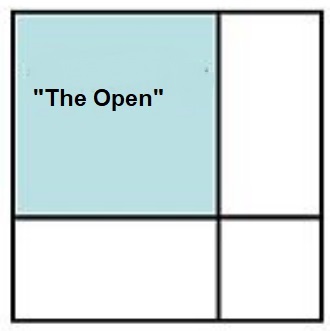
The open field, also called The arena, is formed by what I know about myself and what others know about me. That the field becomes larger means that openness increases. This happens when my exposure, my clarity towards others increases, while my responsiveness to others increases and I receive feedback.
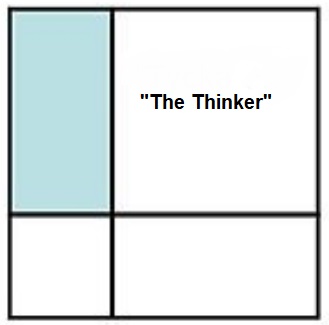
The blind field formed by what I don’t know about myself men what others know about me

The fasade formed by what I know about myself means what others don’t know. If a person hides a lot about himself from others, the fasade becomes big.

The unknown field consists of what I don’t know about myself and what others don’t know about me.
When you participate in change work, there are a large number of external difficulties and obstacles that we have to overcome and we do not deny that.
That we, however, have obstacles within us that we are also not aware of, we probably don’t want to agree to.
If I spend power and energy trying to deny these uncomfortable thoughts, I’m probably not exactly the best force in the process
According to the theory, people with a large open field have the best conditions for interaction with others. The person then has an open manner that facilitates receiving and giving out information. The consequence is that those around you are less inclined to misunderstand or put in incorrect interpretations of statements and behavior.
Openness and thus communication between people is optimized when both responsiveness and clarity are great and also that they are equally great. Then the open window will be maximized.
Of course, it is not always desirable to use a large open field. In the case of temporary and superficial contacts for example, it doesn’t make much sense.
 - Our future society -